
🌟 Introduction: Why Camera Specs Matter
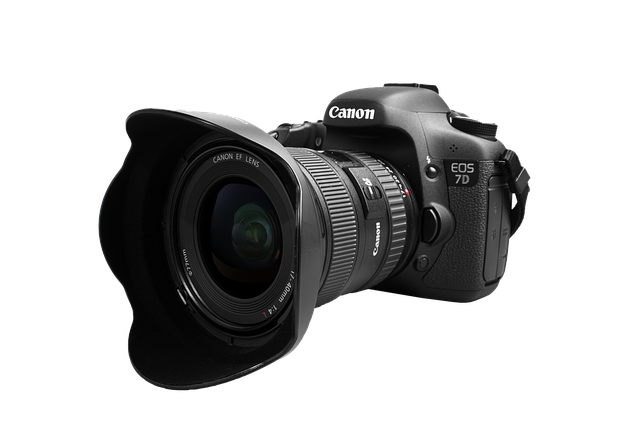
Buying your first camera can feel like learning a new language. Words like APS-C, ISO, or dynamic range sound technical, but once you understand them, they reveal exactly how a camera will perform and what kind of photos you’ll create.
🎯 Think of camera specs as a personality profile.
Once you learn what they mean, you can pick a camera that matches you — your goals, your budget, and your creative style.
🧠 The Sensor: Your Camera’s Digital “Eye”
The sensor is where light turns into an image. It’s a rectangular chip inside your camera that captures what your lens sees — similar to the film in old cameras.
A good sensor is the heart of image quality: the bigger it is, the more light it collects, and the better your photos will look, especially in low light. Their are two basis types: CMOS and CCD.
⚙️ CMOS vs CCD Sensors
Most modern cameras use CMOS (Complementary Metal-Oxide-Semiconductor) sensors. They are faster, cheaper and used in nearly every camera today. Older models used CCD (Charge-Coupled Device) sensors, known for their rich color reproduction.
| Type | Description | Pros | Cons |
|---|---|---|---|
| CMOS | Modern, fast, and efficient sensor type. | Better battery life, faster burst shooting. | Slightly less color depth (minimal difference today). |
| CCD | Older design, slower data transfer. | Great color tone and depth. | Power-hungry, rare in new cameras. |
📏 Sensor Sizes Explained: Full Frame, APS-C, and Micro Four Thirds
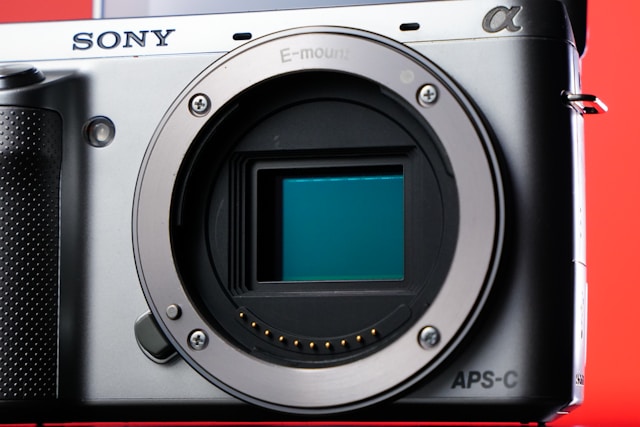
Sensor size affects how much of a scene you capture, how blurred the background looks, and how well your camera performs in low light.
Let’s break down the three main types you’ll encounter:
🟦 Full Frame (35mm Format)
A Full Frame sensor is roughly the same size as a single 35mm film frame — 36×24mm. It captures the widest field of view and performs beautifully in low light.
- Excellent background blur (“bokeh”)
- Great for professional portraits, landscapes, and video
- Larger, heavier, and more expensive
🟧 APS-C (Advanced Photo System – Classic)
APS-C sensors are smaller (around 24×16mm). Because they’re smaller, they capture a narrower portion of the image projected by the lens. This effect is known as the crop factor — typically 1.5× for Nikon/Sony and 1.6× for Canon.
| Full-Frame Lens | On APS-C It Looks Like | Why |
|---|---|---|
| 50mm | ~75mm | 1.5× “crop” effect |
| 35mm | ~52mm | Narrower field of view |
| 24mm | ~36mm | Less wide, more zoomed-in |
💬 In simple terms:
APS-C sensors make your lens “zoom in” slightly — great for wildlife or sports photography where you want extra reach.
🟨 Micro Four Thirds (MFT or M4/3)
Even smaller at around 17×13mm, Micro Four Thirds sensors are used by brands like Olympus (OM System) and Panasonic Lumix.
They have a 2× crop factor, meaning a 25mm lens gives the same view as a 50mm lens on full frame.
- Compact, lightweight cameras and lenses
- Ideal for travel or vlogging setups
- Slightly less background blur and low-light ability
💬 In simple terms:
Micro Four Thirds gives you smaller gear with double the zoom — but less creamy background blur.
🔍 How Sensor Size Affects Your Photos
| Feature | Full Frame | APS-C | Micro Four Thirds |
|---|---|---|---|
| Field of View | Widest | Slightly cropped | Most cropped |
| Background Blur (Bokeh) | Strongest | Moderate | Least |
| Low-Light Performance | Best | Good | Fair |
| Portability | Heavy | Moderate | Light |
| Cost | $$$ | $$ | $ |
🌟 Beginner tip: If you shoot portraits or low-light scenes, full frame wins.
For travel or tight budgets, APS-C or MFT are more than capable.
🧮 Megapixels: How Much Detail You Really Need
A megapixel (MP) equals one million pixels — the dots that make up your photo. Higher megapixels capture more fine detail, but also make larger files. Unless you print huge posters, 20–30MP is more than enough.
| Use Case | Recommended Megapixels |
|---|---|
| Everyday use / social media | 12–20MP |
| Landscape / printing | 20–30MP |
| Commercial / fine art | 30MP+ |
💬 In simple terms: More megapixels help if you crop or print big — but don’t obsess. Lens quality and lighting matter more.
🌈 Dynamic Range: Balancing Brights and Darks
Dynamic range measures how well your camera handles bright highlights and deep shadows in the same shot.
A high dynamic range means:
- Skies aren’t blown out.
- Shadows still show texture.
- Images look natural and balanced.
💡 Tip: If you love sunsets, landscapes, or contrasty scenes, choose a camera with strong dynamic range (13–14 stops or higher).
🌙 ISO: Sensitivity to Light
ISO controls how sensitive your sensor is to light.
- Low ISO (100–400): Cleanest image, use in bright light.
- Medium ISO (800–1600): Indoor or cloudy scenes.
- High ISO (3200+): Night or concerts, but introduces noise (grain).
💬 In simple terms:
Higher ISO makes your camera “see in the dark” — but too high and your photo looks grainy.
🔩 Lens Mounts: Compatibility Matters
When it comes to understanding which lenses work with which cameras, everything starts with the lens mount system. For beginners, this can feel confusing, but once you understand how it works, it becomes one of the easiest ways to navigate the world of camera gear.
🧠 What Is a Lens Mount?
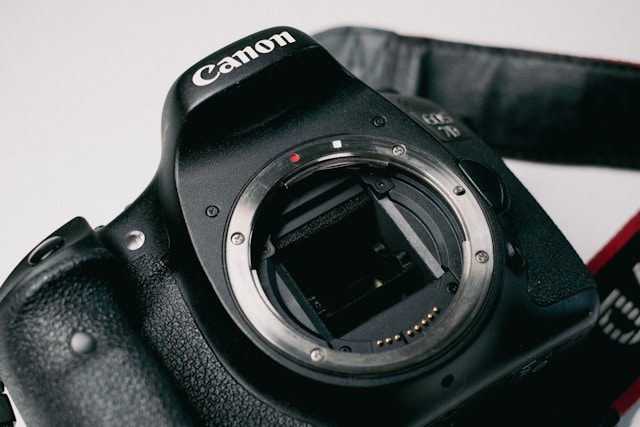
A lens mount is the mechanical and electronic connection point between your camera body and the lens.
Think of it like the charging port on your phone—it’s where the lens “plugs in” to the camera so the two can communicate and work together.
The mount ensures:
- The lens fits physically (attaches securely to the body)
- The camera and lens exchange data (for autofocus, aperture control, image stabilization, and EXIF info)
Each mount is precisely engineered so that the distance between the sensor and the lens (called the flange distance) is perfect for accurate focusing and image capture.
⚙️ Why There Are Different Mounts
Each camera manufacturer has its own mount system, developed to fit their lens design and technology.
This means lenses made for one brand’s mount typically won’t fit another brand’s camera without an adapter.
Here are some common examples:
| Brand | DSLR Mount | Mirrorless Mount | Notes |
|---|---|---|---|
| Canon | EF | RF | EF for older DSLRs; RF for modern mirrorless cameras |
| Nikon | F | Z | Z-mount is thinner and designed for newer mirrorless models |
| Sony | A | E | A-mount was for DSLRs; E-mount now used for all Sony mirrorless cameras |
| Fujifilm | — | X / G | X for APS-C cameras; G for medium format systems |
| Panasonic / Olympus | — | Micro Four Thirds (MFT) | Shared system between both brands |
| Leica | M / SL | L-Mount Alliance | Compatible with Panasonic and Sigma through the L-Mount Alliance |
Each camera brand has its own way of attaching the lens to the camera called the mount system — meaning lenses are not interchangeable between brands without adapters.
💡 Tip:
When you choose a camera, you’re also choosing a mount system — and that determines what lenses and accessories you can use in the future.
🔗 How the Mount Connection Works
- Mechanical Connection:
The metal bayonet ring on the camera lines up with the lens mount. When you twist the lens into place, it locks securely via a small lock pin. - Electronic Communication:
A series of gold contacts around the mount allow the lens and camera to “talk” — transmitting autofocus signals, aperture settings, and stabilization data in real time. - Flange Focal Distance (FFD):
This is the exact distance between the camera sensor and the lens mount.- DSLR cameras have a longer flange distance because of their mirror mechanism.
- Mirrorless cameras have a shorter flange distance, allowing for smaller, lighter bodies and more adaptable lens options.
🔧 Lens Adapters: Mixing and Matching Systems
If you’ve ever seen photographers using old or different-brand lenses, that’s where lens adapters come in. These are small metal rings that bridge one mount type to another.
However, there are important limitations to know:
- Some adapters maintain autofocus and aperture control, while others only allow manual focus.
- Using adapted lenses can sometimes reduce autofocus speed or accuracy.
- Image stabilization and communication features may not always function perfectly.
⚠️ Beginner Tip:
Stick with native lenses for your mount when starting out. They’re guaranteed to work flawlessly, provide the best autofocus performance, and support every camera feature.
🔍 Mount Size and Sensor Format: The Hidden Relationship
The mount size determines how large a sensor the system can support.
For example:
- Full-frame cameras need larger mounts to accommodate bigger sensors.
- APS-C and Micro Four Thirds (MFT) cameras can use smaller mounts since their sensors are smaller.
This affects not only image quality but also how lenses are designed:
- Smaller mounts → more compact lenses
- Larger mounts → better light-gathering and depth-of-field control
📸 Why Choosing the Right Mount Matters
When you invest in a camera, you’re not just buying the body — you’re buying into a system. The mount determines what future lenses, adapters, and accessories you’ll be able to use.
Before you buy, ask yourself:
- Does this system have enough lenses for my type of photography (e.g., portraits, travel, wildlife)?
- Are there both budget-friendly and professional lens options available?
- Is the mount likely to be supported long-term by the brand?
💬 Example:
Canon’s EF mount was used for decades on DSLR cameras, but its new mirrorless line uses the RF mount. Buying into the RF system now gives you access to Canon’s latest technology and lenses — but EF lenses require an adapter.
🧩 In Summary
The lens mount system is the foundation of your entire camera setup.
Once you choose one, you’re choosing a whole ecosystem — lenses, adapters, and future upgrades that will shape your photography journey.
So, before you get caught up in megapixels or fancy specs, take a moment to understand the mount system. It’s the quiet, hidden hero that makes your camera and lenses work together seamlessly.
| Brand | Mount | Format | Notes |
|---|---|---|---|
| Canon | RF (mirrorless), EF (DSLR) | Full Frame / APS-C | RF is the new standard |
| Nikon | Z (mirrorless), F (DSLR) | Full Frame / APS-C | Z is lighter and faster |
| Sony | E-mount | APS-C & Full Frame | Huge lens selection |
| Fujifilm | X-mount | APS-C | Excellent color science |
| Olympus / Panasonic | Micro Four Thirds | — | Shared lens ecosystem |
⚙️ In simple terms:
Stick to one mount system — that way your future lenses will always fit.
🔆 Aperture (f-stop): Controlling Light and Blur
The aperture is the opening in your lens that lets in light.
It’s written as f/number (for example, f/1.8 or f/8).
| f-Stop | Effect | Example Use |
|---|---|---|
| f/1.8 – f/2.8 | Bright, shallow focus | Portraits, low light |
| f/4 – f/8 | Balanced sharpness | Everyday shooting |
| f/11 – f/16 | Very sharp, less light | Landscapes |
💬 In simple terms:
The smaller the f-number, the more blur and light you get.
📏 Focal Length: Zoom and Perspective
Measured in millimeters (mm), focal length determines how much of the scene you see.
| Lens Type | Range | Best For |
|---|---|---|
| Wide Angle | 10–35mm | Landscapes, architecture |
| Standard | 35–70mm | Everyday scenes, portraits |
| Telephoto | 70–300mm+ | Wildlife, sports |
| Macro | 90–105mm | Close-up subjects |
💡 Note: On APS-C cameras, multiply by 1.5× to know how “zoomed-in” it will look.
⚡ Autofocus (AF): Keeping Your Photos Sharp
Autofocus (AF) is how your camera locks onto a subject.
- Contrast Detection: Accurate but slower (common in older models).
- Phase Detection: Fast, great for moving subjects.
- Hybrid AF: Combines both — used in most modern mirrorless cameras.
Useful AF Features
- Eye AF: Focuses on the subject’s eyes (amazing for portraits).
- Subject Tracking: Keeps focus on moving people, pets, or cars.
- AF Points: The more points, the more flexible your focus composition.
💬 In simple terms:
Eye AF and tracking are your best friends — they make sharp photos almost automatic.
🪶 Image Stabilization (IS): Reducing Shake
Image stabilization helps avoid blurry shots, especially in low light or at long zooms.
| Type | Found In | Use |
|---|---|---|
| In-Lens (OIS) | Certain lenses | Great for telephoto lenses |
| In-Body (IBIS) | Camera body | Works with all lenses |
| Digital IS | Video mode | Helps reduce motion |
💬 In simple terms:
IBIS (in-body stabilization) means you can shoot handheld and still get sharp photos — even at slow shutter speeds.
🕹️ Extra Shooting Features
- Shutter Speed: How long the sensor is exposed (1/1000s freezes motion, 1s blurs it).
- Burst Rate (FPS): How many shots per second (great for action).
- Silent Mode: Uses an electronic shutter — ideal for quiet settings like weddings.
🪞 Viewfinders and Screens
- Optical Viewfinder (OVF): Real optical view (used in DSLRs).
- Electronic Viewfinder (EVF): Digital preview of exposure and effects.
- Articulated LCD Screen: Tilts or flips for vlogging and selfies.
💬 In simple terms:
Mirrorless EVFs show exactly what your photo will look like before you take it.
🌐 Connectivity & Storage
Modern cameras act like smart devices:
- Wi-Fi / Bluetooth: Send photos to your phone instantly.
- NFC: Tap to connect.
- USB-C: Fast charging and transfers.
- Dual SD Slots: Save backups while shooting.
💾 Tip: Buy fast SD cards (UHS-II, V90). Slow cards can cause lag in burst shooting.
💰 Making a Smart Purchase
Ask yourself:
- What will I photograph most — people, travel, sports?
- Do I want the smallest setup or the best low-light performance?
- What’s my lens upgrade path?
🧩 Pro Tip: Always hold the camera in your hands before buying. Comfort, grip, and menu layout matter more than you’d think.
✨ Final Thoughts
Once you understand what camera specs really mean, the process becomes exciting — not overwhelming.
You’ll stop asking “Which camera is best?” and start asking “Which camera fits me best?”
That’s when your photography truly begins to grow.
🎥 Remember: The best camera isn’t the one with the biggest numbers — it’s the one that inspires you to shoot every day.